
-
Created by
 user-6d962, last updated on Apr 15, 2023
2 minute read
user-6d962, last updated on Apr 15, 2023
2 minute read
This page pertains to ONLY Vermont and pilot programs using ADAM for their assessment management system AND web extensions on ChromeOS testing devices.
ADAM Users not using web extensions, can use either this page or Set Up TestNav PWA on ChromeOS.
- All other ChromeOS users, see Set Up TestNav on ChromeOS.
After you download TestNav, complete the setup using the sections below.
During BOTH the infrastructure trial and the actual test, note which specific device each student uses during each test. The TestNav app saves SRFs to only one designated place on the testing device. If an error occurs, you can locate files only on that specific device.
Install TestNav
To install TestNav, first ensure each device's settings are set to keep local data to avoid accidentally deleting the SRF and log files. Then, you add TestNav as a kiosk app.
Content filters and TestNav...
If your content filters are activated when a student signs in to the Chrome device, contact Pearson Support for additional URLs to add to your kiosk settings for URL blocking. TestNav does not require that the student sign in to the Chrome device. As a result, these content filters do not filter as intended during a TestNav test.
Step-by-Step
Go to the TN Engineering App installation page and follow the instructions provided.
Sign in to TestNav
- Power on the device, but do not log in.
- In the lower left of the screen, select to launch TestNav.
A message appears, informing you that you can use <ctrl><alt>s to exit Chrome OS when you first launch TestNav. This works only while the message displays. If you have not already done so, choose the appropriate icon for your test on the home page. If your test was selected before the test session, you see the Sign In page, rather than the home page.
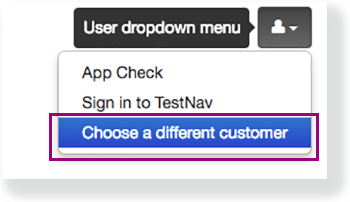
If you need to select a different test, click the user drop-down menu at the upper-right of the page, and click Choose a different customer.
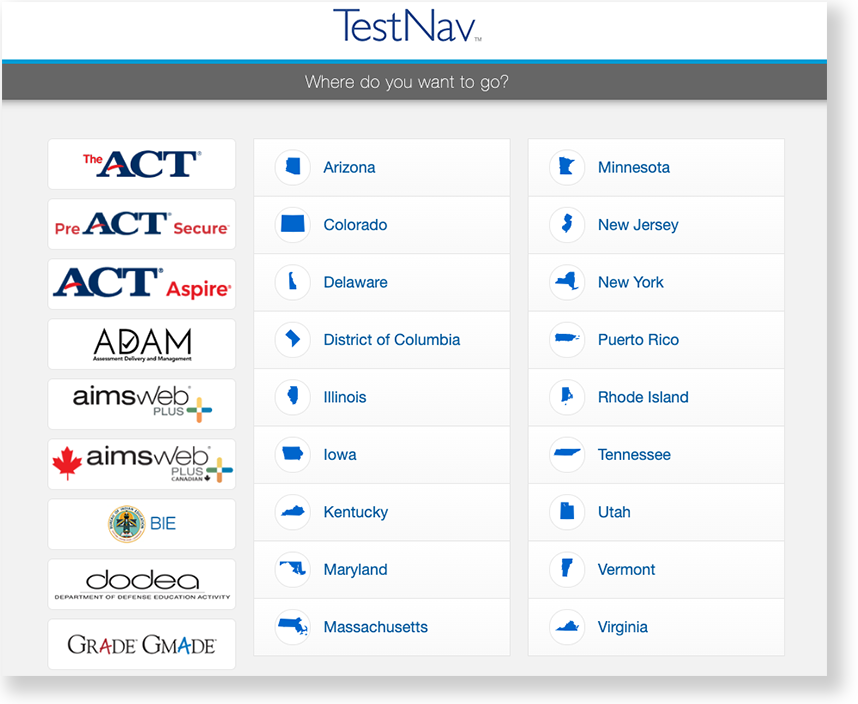
Click the appropriate icon for your test.
- Start a test to ensure that you can do so without error, using ADAM test card credentials.
- To shut down and exit kiosk mode after the app launches, hold down the button.
Find and Set Up Response File Backups
SFTP configuration is not supported by all assessment management systems. Consult your assessment management system user guide to determine whether the SFTP option is available. Familiarize yourself with the default primary save location. Configure the secondary save location through your assessment management system. Communicate SRF and log file locations/procedures to proctors (see Primary Save Location below). Note which student tests on which device during infrastructure trials and on test days.
The same secondary save location applies to all computers and devices. You only need to set this configuration one time.
Primary Save Location
On Chrome OS, the SRF default primary save location is not customizable.
To find files on Chrome OS:
- Launch the TestNav app.
- Focus your cursor in the username or password field.
- Press <ctrl><shft>z, and the File Viewer box appears.
If the File Viewer does not display, click on the window and then press <ctrl><shft>z again. - Plug in a USB memory stick.
- Click the download button next to the srf and log file(s) you want to download.
- When the window opens, select the USB memory stick, and click Save.
Pearson strongly recommends running an infrastructure trial to verify the technology setup is complete and to familiarize teachers and students with the test. Use your training site through your assessment management system to complete the trial before the actual test day.Run an Infrastructure Trial
You can learn more about SRF and log files on the Set Up and Use TestNav page.Related Information