
-
Created by
 user-6d962 on Sep 12, 2023
1 minute read
user-6d962 on Sep 12, 2023
1 minute read
Please note that Pearson supports only managed Chromebooks for secure testing. Both before you install TestNav AND prior to each testing session, you should check each device to ensure it is in managed status. For further instruction on this, see TestNav - ChromeOS Managed Devices. To install TestNav, first ensure each device's settings are set to keep local data to avoid accidentally deleting the SRF and log files. Then, you add TestNav as a kiosk app. Content filters and TestNav... If your content filters are activated when a student signs in to the Chrome device, contact Pearson Support for additional URLs to add to your kiosk settings for URL blocking. TestNav does not require that the student sign in to the Chrome device. As a result, these content filters do not filter as intended during a TestNav test. [*.]testnav.com [*.]classlink.com [*.]schoology.com [*.]act.org [*.]actaspire.org Note on accessibility tools/accommodations... Students with accommodations or accessibility features enabled through their PNP or test form access those features within TestNav. ChromeOS has native accessibility features that might appear within a kiosk floating accessibility menu during testing. Technology personnel should disable this menu before testing to avoid it interfering with the student’s test. When a student responds to a test question, TestNav sends the response to the Pearson server. If the network experiences a connectivity issue, or the student encounters an error, TestNav saves the response to a saved response file (SRF). For configuration details, see: Set Up Saved Response Files (SRF).Install TestNav
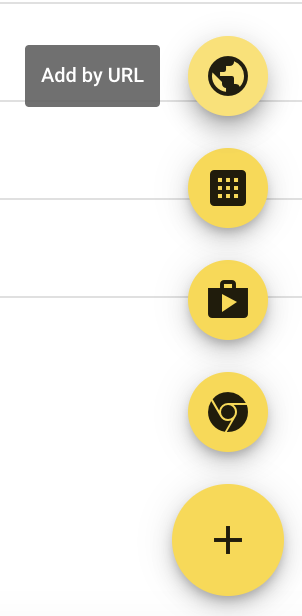

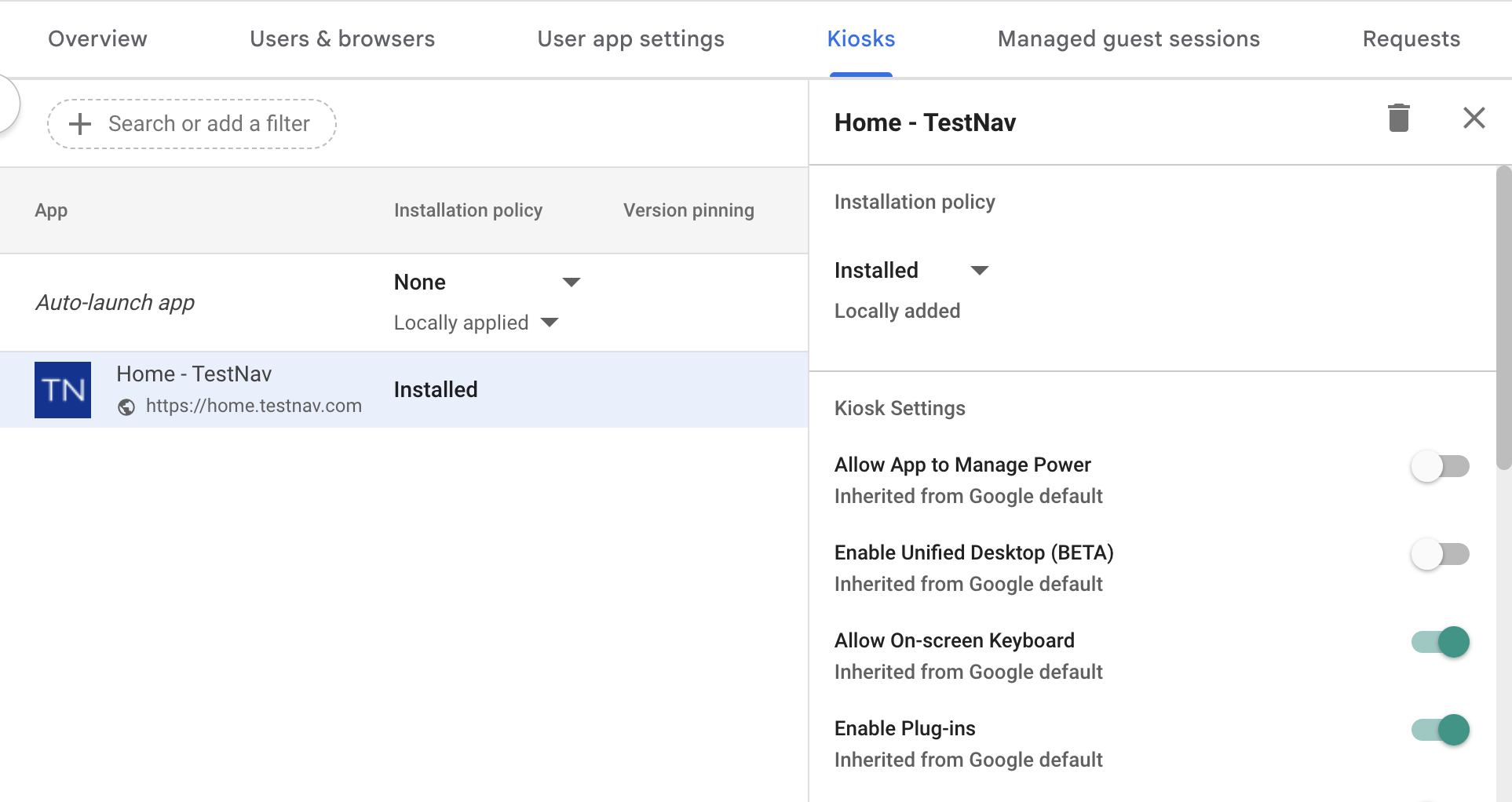
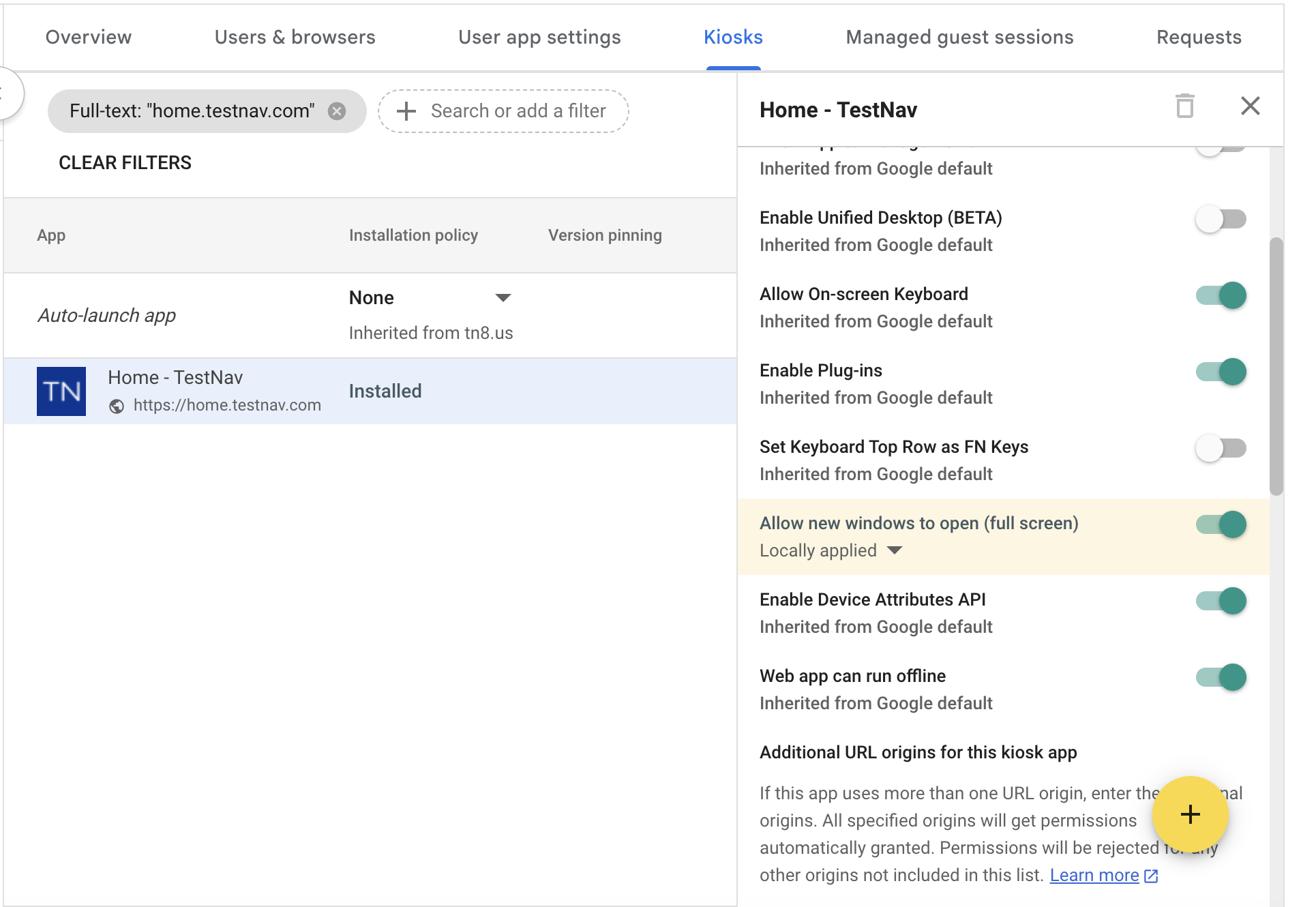
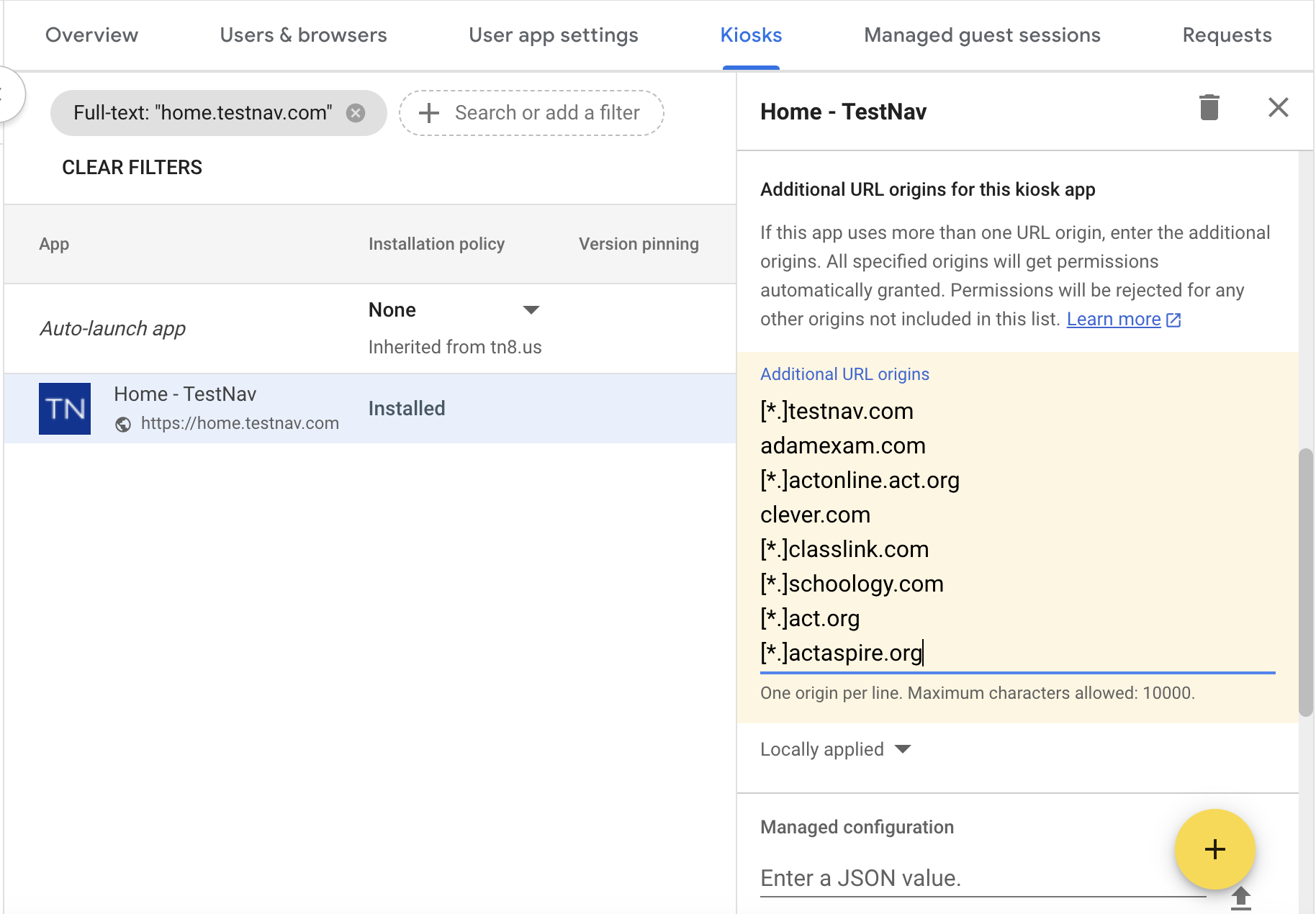
gjhfdhjfmmgldldpmfdmbddbegbachgo
https://download.testnav.com/chrome-extension/update-manifest.xml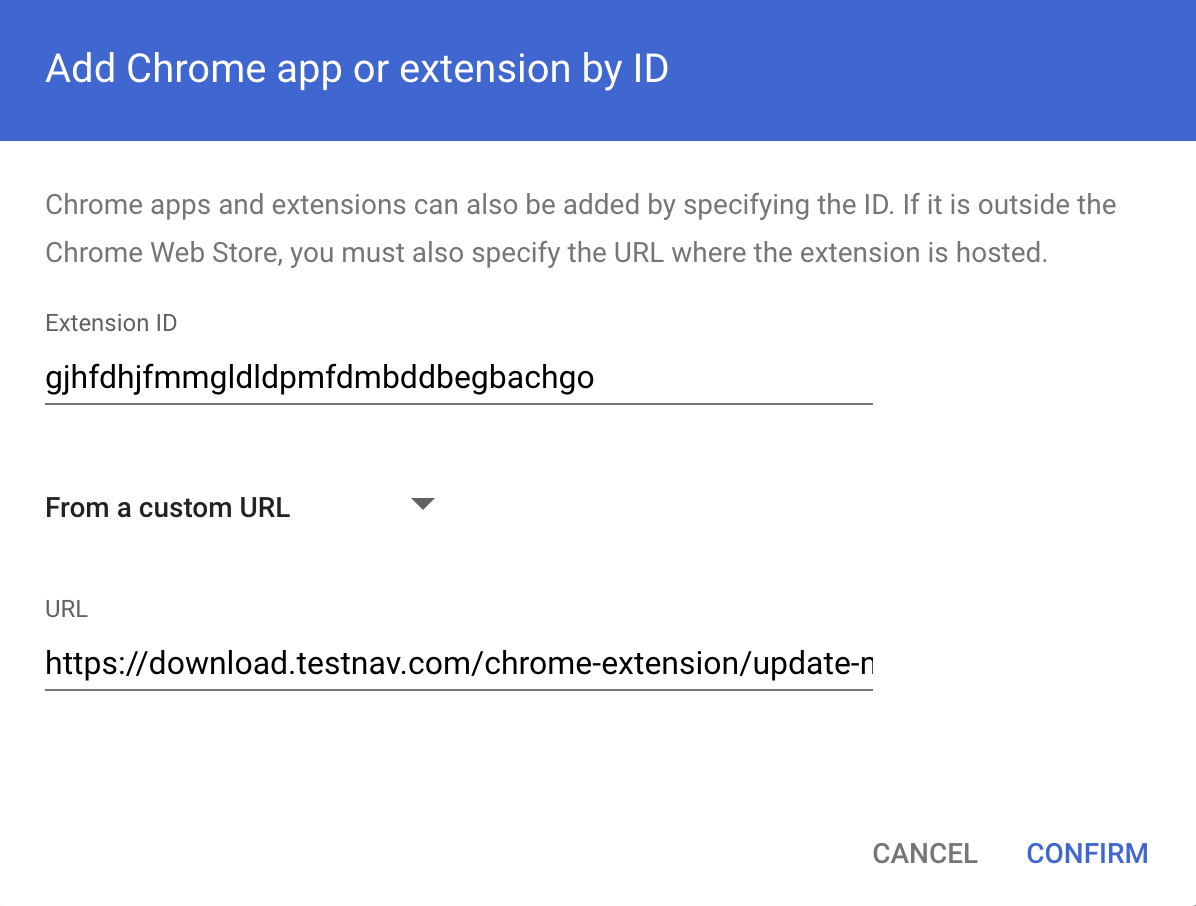
Find and Set Up Student Response File Backups